1. Proof-based general-purpose computing with Magnetar At a glance A new form of computing . Zero-knowledge proofs let you run a workload and receive, alongside the result, a short proof that the program ran correctly. Anyone can check 10/16 00:00 ♡
2. Simulating student learning for better AI tutoring At a glance StudentSim is a research system for evaluating and improving AI tutors before they are tested with real learners; it is not a product, is not deployed in classrooms, an 10/13 00:00 ♡
3. Agent Lightning v1.0: A 3,500-Line Lightweight Agentic RL Framework for Training Agents with Real Harnesses At a glance Harnessed Agentic RL: Microsoft Research Asia introduces a training paradigm in which the same agent harness used in deployment participates directly in reinforcement l 10/08 00:00 ♡
4. Forecasting space weather risks on power grids At a glance End-to-end forecasting: A machine learning pipeline uses forecast-time solar-wind information to generate location-specific risk estimates for 66,935 substations in the 10/01 00:00 ♡
5. Introducing Quine: An AI research system designed for the complexity of biology At a glance Quine (opens in new tab) is a research effort to create a multimodal world model of biology and an interactive harness connecting models, scientific tools, literature, 09/29 22:00 ♡
6. One year in: How Microsoft Research Asia – Singapore is advancing research, partnership and talent for real-world impact On July 24, 2025, Microsoft Research Asia – Singapore (MSRA – Singapore) opened its doors as Microsoft’s first research lab in Southeast Asia. The launch built on more 09/29 05:00 ♡
7. Offloaded inference for real-world physical AI robotics At a glance Challenges a core assumption in robotics AI: Our research shows that running physical AI inference exclusively on onboard GPUs can limit robot performance, battery life 09/24 00:01 ♡
8. Improving synthesis prediction of small molecules at scale with RetroChimera At a glance We report on the recent publication of our retrosynthesis model RetroChimera in the journal Nature (opens in new tab) . The paper describes the model’s architecture as 09/21 23:30 ♡
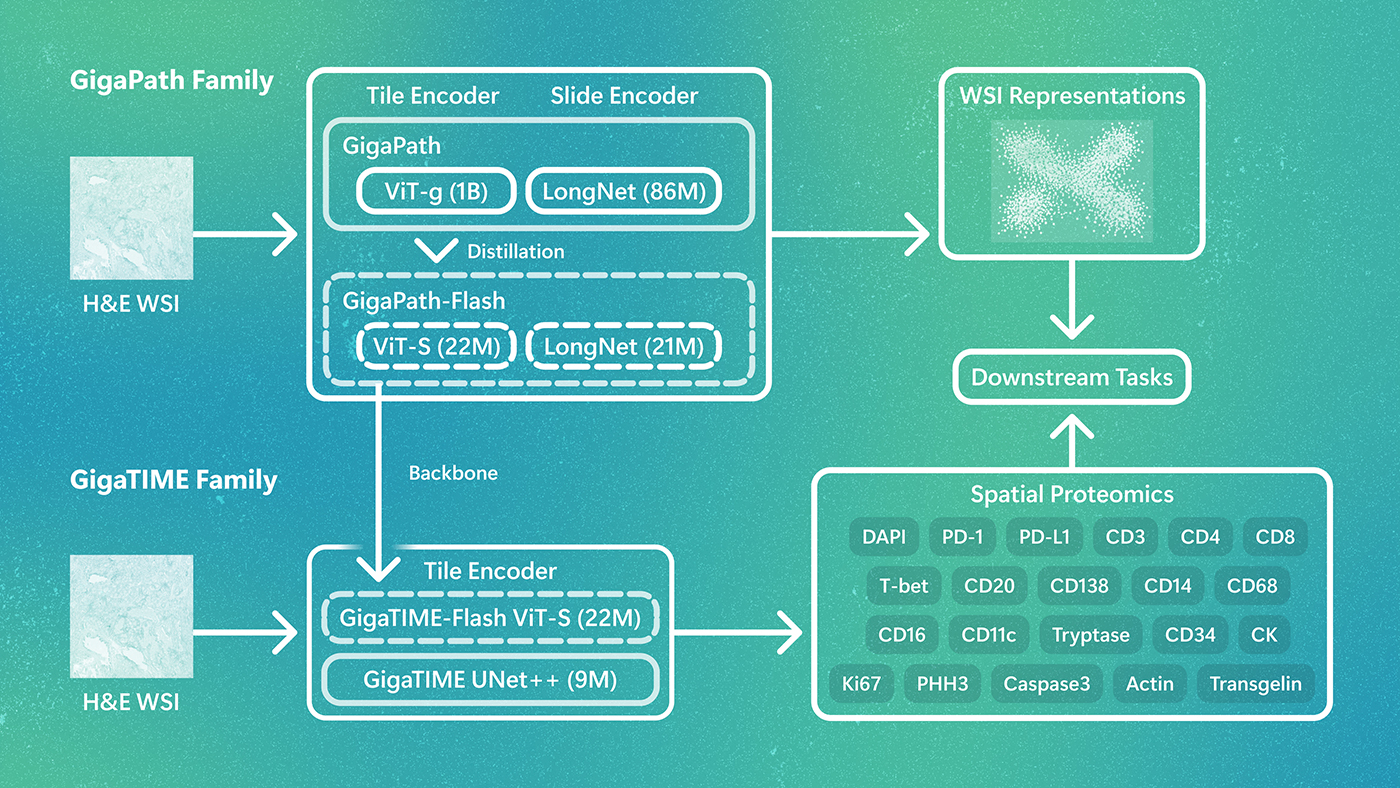
9. GigaPath-Flash and GigaTIME-Flash: Toward population-scale discovery with efficient pathology foundation models At a glance The Flash family extends GigaPath and GigaTIME with dramatically improved efficiency, making large-scale pathology research more accessible and practical. A distilled p 09/01 00:00 ♡
10. Broadening access to Skala creates a faster path to predictive DFT At a glance Skala 1.1 demonstrates the continuously improving nature of Microsoft Research’s deep-learning DFT approach: trained on 2.5× more data than its predecessor, it de 08/21 00:00 ♡